Wedding Dress Fabrics Guide: Lace, Tulle, Satin, Chiffon & More
The fabric of a wedding dress can completely change the way a gown looks, moves, photographs, and feels. Two dresses with the same silhouette may create very different impressions simply because one is made from soft chiffon and the other from structured satin or Mikado.
Understanding the most popular wedding dress fabrics can help you narrow your choices and find a gown that matches your bridal style, wedding venue, season, and comfort preferences.
In this guide, we’ll look at some of the most popular bridal fabrics, including lace, tulle, satin, chiffon, organza, and Mikado, and explain what makes each one special.
Why Wedding Dress Fabric Matters
Wedding dress fabric influences much more than appearance. It affects how the gown drapes, how much structure it has, how light or substantial it feels, and how well it works with details such as lace appliqués, beading, embroidery, sleeves, and trains.
When choosing your gown, think about the overall feeling you want to create. Do you imagine something soft and romantic, clean and modern, dramatic and structured, or light and effortless?
Your answer can help guide you toward the right bridal fabric.
Lace Wedding Dresses
Lace is one of the most recognizable and romantic wedding dress fabrics. It can range from delicate and airy to richly textured and dramatic.
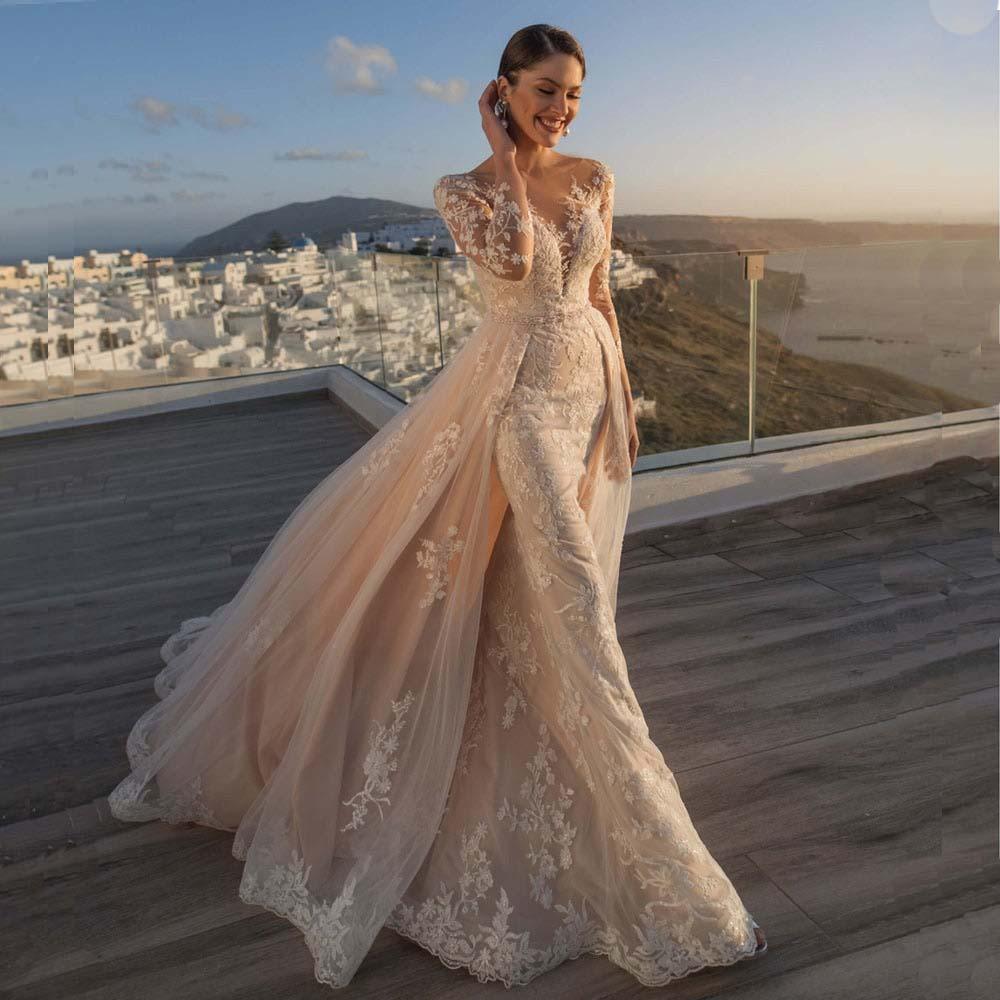
Lace may be used throughout an entire gown or layered over tulle, satin, or another base fabric. It is also commonly used for appliqués, sleeves, bodices, necklines, and trains.
Lace works beautifully for many bridal styles, including romantic, vintage-inspired, modest, bohemian, and traditional wedding dresses.
It can also add visual depth without requiring heavy embellishment.
Best for: romantic gowns, long sleeves, modest wedding dresses, vintage-inspired styles, A-line gowns, mermaid dresses, and detailed bridal looks.
Tulle Wedding Dresses
Tulle is a lightweight net-like fabric frequently used in wedding dress skirts, veils, overlays, and sleeves.
Multiple layers of tulle can create volume for a princess or ball gown, while softer layers can give an A-line dress an airy, romantic appearance.
Tulle also works especially well with lace appliqués, embroidery, glitter details, and 3D flowers because decorative elements can appear to float across the fabric.
Best for: ball gowns, A-line dresses, romantic wedding dresses, layered skirts, veils, and gowns with appliqués or floral details.

Satin Wedding Dresses
Satin is known for its smooth surface and elegant finish. Depending on the type and weight, satin can create anything from a softly flowing gown to a more structured bridal silhouette.
Satin wedding dresses often have a clean, sophisticated appearance, making the fabric especially popular for minimalist and modern bridal designs.
Because satin itself creates visual impact, a gown does not always need extensive embellishment to feel luxurious.
Best for: minimalist wedding dresses, A-line gowns, ball gowns, modern bridal styles, clean silhouettes, and elegant formal weddings.

Chiffon Wedding Dresses
Chiffon is lightweight, soft, and fluid. Rather than creating strong structure, it tends to fall gently and move naturally with the body.
This makes chiffon particularly attractive for brides who want a relaxed, graceful wedding dress with plenty of movement.
It is often used in flowing A-line and empire-waist gowns and can also work beautifully for sleeves and layered skirts.
Best for: beach weddings, destination weddings, outdoor ceremonies, bohemian styles, flowing A-line gowns, and brides who prefer a softer silhouette.
Organza Wedding Dresses
Organza has a light appearance but usually offers more structure than chiffon. It can hold shape while still creating an airy bridal effect.
This makes it useful for fuller skirts, layered designs, sculptural details, and gowns that need volume without looking overly heavy.
Organza can also be combined with lace appliqués, embroidery, or floral embellishments for a romantic yet structured look.
Best for: A-line gowns, ball gowns, layered skirts, floral wedding dresses, and brides who want lightweight volume.
Mikado Wedding Dresses
Mikado is a structured bridal fabric with a smooth, refined appearance. It is often chosen for gowns that rely on shape, tailoring, and architectural lines rather than heavy embellishment.
Because the fabric holds its shape well, Mikado can create dramatic pleats, structured bodices, full skirts, and clean modern silhouettes.
Best for: modern wedding dresses, structured A-line gowns, princess ball gowns, minimalist designs, and formal weddings.

Lace vs. Tulle vs. Satin: Which Should You Choose?
If you want a romantic and detailed look, lace may be the natural choice. If you dream of a soft, airy skirt with volume, tulle can create that effect beautifully. If your style is clean, polished, and elegant, satin may suit you better.
There is no single “best” wedding dress fabric. The right choice depends on the silhouette, design details, and feeling you want your gown to create.
| Fabric | Overall Feel | Popular For |
|---|---|---|
| Lace | Romantic and detailed | Vintage, modest, romantic and detailed gowns |
| Tulle | Soft and airy | Ball gowns, A-line skirts and floral appliqués |
| Satin | Smooth and elegant | Modern, minimalist and formal gowns |
| Chiffon | Light and flowing | Beach, destination and boho weddings |
| Organza | Light but structured | Layered skirts and romantic volume |
| Mikado | Structured and refined | Modern A-line and ball gown silhouettes |
Which Wedding Dress Fabrics Work Best for Different Silhouettes?
A-Line Wedding Dresses
A-line gowns are extremely versatile and can work beautifully in lace, tulle, chiffon, satin, organza, and Mikado.
The fabric mainly determines whether the final look feels soft and romantic or clean and structured.
Ball Gown Wedding Dresses
Tulle and organza can create soft volume, while satin and Mikado offer more structure and drama. Lace can be layered over any of these fabrics for additional texture.
Mermaid Wedding Dresses
Lace is especially popular for mermaid gowns because it can follow the shape of the body while adding intricate detail. More structured fabrics can create a cleaner and more sculpted appearance.
Bohemian and Destination Wedding Dresses
Chiffon, soft lace, and lightweight tulle are popular choices for brides who want movement, comfort, and a relaxed bridal feeling.
Which Fabric Is Best for a Modest Wedding Dress?
There is no single fabric required for modest bridal styling. The most important considerations are coverage, opacity, construction, and how the fabric is layered.
Lace is especially popular for modest wedding dresses because it works beautifully for long sleeves, higher necklines, and covered bodices while still creating a romantic bridal look.
Satin and Mikado can offer more complete coverage and structure, while lined tulle or organza can create softer modest designs.
Explore our Modest Wedding Dresses collection for more inspiration.
How Wedding Dress Fabric Can Affect Price
Fabric is one of several factors that can influence the cost of a wedding dress.
The amount of fabric required, the number of layers, decorative lace, embroidery, beading, appliqués, and the complexity of construction can all affect the amount of material and workmanship involved.
A clean satin gown may have fewer decorative details, while a heavily embellished lace gown with multiple layers and hand-applied appliqués may require more work.
For a more complete explanation of wedding dress pricing, read our How Much Does a Custom Wedding Dress Cost? guide.
Does More Expensive Fabric Always Mean a Better Wedding Dress?
Not necessarily.
The right fabric is the one that works well with the gown's design, construction, and the bride's preferences.
A lightweight chiffon gown can be beautiful for a destination wedding even though it creates a very different look from a structured Mikado ball gown.
Quality should be considered together with design, workmanship, fit, and how the fabric is used.
How to Choose the Right Wedding Dress Fabric for Your Wedding
Think about where and when you are getting married, how much movement you want in the dress, the silhouette you love, and whether you prefer a soft or structured look.
A beach bride may naturally gravitate toward chiffon or lightweight lace, while a bride planning a formal ballroom wedding may prefer satin, Mikado, layered tulle, or richly detailed lace.
Most importantly, choose the fabric that creates the bridal feeling you want when you imagine yourself walking down the aisle.
Made-to-Measure Wedding Dresses at Her Shop
Her Shop offers a wide variety of wedding dress styles featuring lace, tulle, satin, chiffon, organza, and other bridal fabrics.
Many of our wedding dresses are available with custom sizing, and selected styles may also allow personalization of details such as sleeves, neckline, color, train, or coverage.
Our online-focused model allows us to offer beautifully crafted bridal gowns and made-to-measure options at competitive prices, helping brides focus their budget on the design and details they love.
For more information about customization, visit our How to Order a Custom Wedding Dress guide.
Frequently Asked Questions About Wedding Dress Fabrics
What is the most popular wedding dress fabric?
Lace, tulle, satin, and chiffon are among the most widely used bridal fabrics, but popularity depends heavily on the gown style and the bride's personal preference.
Which wedding dress fabric is the most lightweight?
Chiffon is known for its soft, lightweight movement, while soft tulle can also create an airy appearance.
Which fabric is best for a structured wedding dress?
Mikado and heavier satin fabrics are popular choices when the gown requires more structure and definition.
Which fabric works well for a romantic wedding dress?
Lace and tulle are especially popular for romantic bridal styles because they pair beautifully with appliqués, floral details, embroidery, and layered skirts.
Can different fabrics be combined in one wedding dress?
Yes. Many wedding dresses combine several fabrics. A gown might feature a satin lining, tulle skirt, lace bodice, and appliqué details, for example.
Find the Wedding Dress Fabric That Feels Right for You
The best wedding dress fabric is not simply the most expensive or the most traditional. It is the fabric that helps create the silhouette, movement, texture, and bridal feeling you love.
Explore different fabrics, silhouettes, and details until you find the combination that feels beautifully yours.